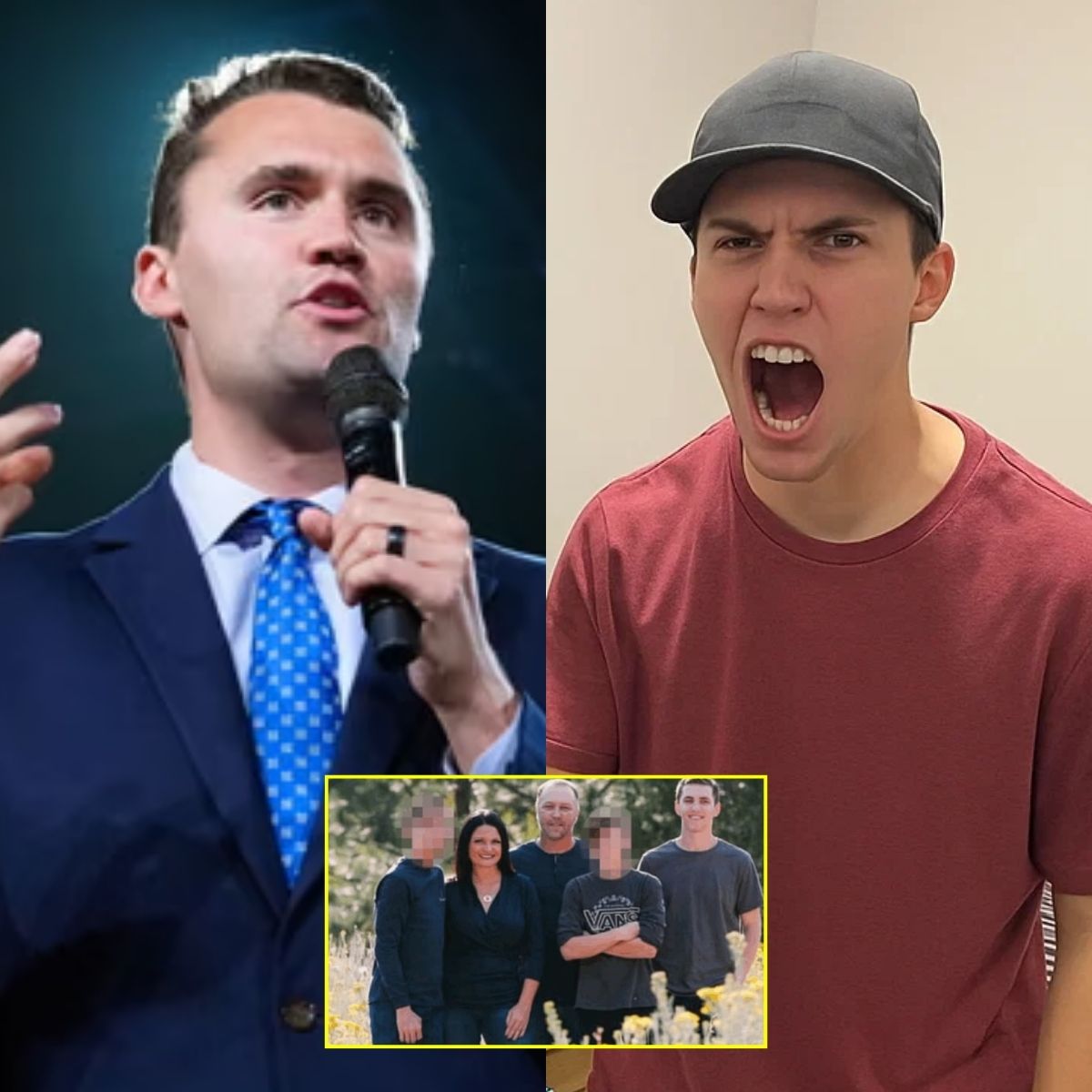
Tyler Robinson was once a cheerful, ordinary boy who brought light to everyone around him. His laughter filled the quiet streets, and neighbors often commented on how sweet and well-behaved he was. On the surface, Tyler’s life appeared flawless. Yet, beneath his bright smile lay shadows no one could have imagined.
Inside the Robinson household, subtle tensions simmered. Doors that should have been locked were sometimes ajar, faint whispers echoed through hallways at odd hours, and Tyler often seemed lost in thought, staring at something unseen. While his parents insisted all was normal, Tyler’s friends occasionally noticed a side of him they didn’t understand — sudden silences, cautious glances, and a mysterious unease that seemed too heavy for a boy his age.
As Tyler grew, these small anomalies became impossible to ignore. Though surrounded by love, the boy sensed that secrets loomed in every corner, waiting to burst into the open. He could not have known that these early shadows were setting the stage for an unimaginable tragedy.
Charlie Kirk was a man admired by many — charismatic, articulate, and seemingly untouchable. To the public, he was flawless, a figure of influence whose words carried weight. But like many who occupy the public eye, his life was far from transparent. Late-night meetings, hushed phone calls, and concealed decisions shaped a reality only a few truly understood.
It was in these murky circumstances that Tyler’s life intersected with Charlie Kirk’s. What began as a seemingly casual interaction quickly escalated into something far more ominous.
Observers noted tension — a subtle but undeniable strain between the two, hinting at secrets that no one was willing to speak aloud. Tyler, young and perceptive, sensed danger long before anyone else did.
As days passed, subtle warnings emerged. Unexplained phone calls to the Robinson home, shadowy figures at distant intersections, and sudden disruptions in Tyler’s routines all hinted at an underlying threat. And yet, no one outside the family could have predicted how far-reaching these events would become.
Then came the appearance of the mysterious figure. No one knew their identity, their motives, or how they always seemed to be in the right place at the right time. Some whispered of a stranger lingering near the Robinson home late at night; others claimed to have glimpsed them during private gatherings. Wherever they appeared, tension followed.
This figure’s presence disrupted the fragile balance between Tyler, his family, and Charlie Kirk. Messages, both digital and verbal, were left behind, hinting at hidden alliances, secret knowledge, and intentions that nobody could decipher. The figure’s moves were deliberate yet unpredictable — an enigma wrapped in layers of intrigue.
When Tyler’s interactions with Charlie became more direct, the mysterious figure made a decisive move. Whether through a revelation, a confrontation, or a silent manipulation, everything shifted. The public, the family, even Tyler himself, struggled to make sense of what was happening. Every assumption, every belief, every detail that seemed certain was now in question.
The events leading to Charlie Kirk’s death were a series of escalating incidents, each more shocking than the last. Conflicting accounts, sudden confrontations, and moments of betrayal converged in a single fateful day. Family members, who had long held back, finally recounted the horror they witnessed.
Tyler’s parents described how small tensions exploded into chaos: arguments turned violent, phone calls from unknown sources sowed panic, and the mysterious figure’s involvement became undeniable. Witnesses would later recall the chilling sight of Charlie in his final moments — a man caught in a web of secrets, deception, and unexpected aggression.

By the time the tragedy concluded, lives were forever changed. Tyler, once a carefree boy, had now witnessed a level of darkness that no child should ever see. The public’s understanding of the incident, shaped by rumors and media narratives, barely scratched the surface of the truth.
In the weeks following Charlie Kirk’s death, Tyler’s family made the courageous decision to speak out. For the first time, they revealed details that had been buried: secret meetings, cryptic messages, unexplained absences, and the pivotal role of the mysterious figure. The revelations were staggering — stories of betrayal, hidden alliances, and unexpected decisions that turned tragedy into public spectacle.
The family described the figure’s sudden intervention at critical moments, how their actions altered outcomes, and why certain truths had been kept from public knowledge. For the Robinsons, the weight of the secret was unbearable; for the public, the revelations were electrifying. People were left questioning everything they thought they knew about both Tyler and Charlie.
Just when the public believed they understood the narrative, the mysterious figure struck again. A final, unexpected action changed perceptions forever. Some said it was an act of protection; others insisted it was revenge. Tyler, now older and wiser, reflected on the chaotic events and realized that no single version of the story could ever capture its full magnitude.
The twist sent shockwaves: friends and neighbors were stunned, media outlets scrambled for answers, and the public grappled with a reality far stranger than any rumor. The figure’s motives remained unclear — a puzzle that kept everyone guessing. But one thing was certain: nothing would ever be the same again.

Even with all the revelations, countless questions lingered:
-
Who can truly be trusted in a world where secrets control outcomes?
-
What other actions did the mysterious figure take behind the scenes?
-
And ultimately, how much of Tyler’s life had been shaped by forces no one could see?
Each question invited speculation, fueled debates online, and ensured that the story would remain a topic of intrigue for years to come. For Tyler, the journey from an ordinary boy to a witness of unimaginable tragedy had redefined his understanding of trust, family, and fate itself.
Tyler Robinson’s past, once hidden behind laughter and normalcy, had been laid bare. The family’s revelations brought clarity, yet the shadow of the mysterious figure ensured that the story remained far from complete.
Every reader who learned the truth faced the same chilling realization: appearances can be deceiving, and the line between friend and foe is thinner than ever imagined.
Discover the full story for yourself — the shocking truth behind Charlie Kirk’s death and the mysterious figure who changed everything is waiting. You won’t believe what happens next.
Tyler Robinson was once an ordinary boy, cheerful and full of life. To the outside world, his childhood seemed perfect — filled with laughter, friends, and family love. Yet beneath the surface, shadows lingered. Strange occurrences in the home, whispered arguments behind closed doors, and moments of sudden silence hinted at secrets no one was ready to confront.
As Tyler grew, these small anomalies became impossible to ignore. Doors left ajar, fleeting shadows, and mysterious phone calls created an atmosphere of quiet unease. His parents insisted everything was normal, but Tyler couldn’t shake the feeling that something was very wrong.
Then there was Charlie Kirk — a public figure admired by many. Charismatic and influential, Charlie’s life seemed untouchable. But behind the polished facade lay hidden meetings, quiet conflicts, and choices that would soon intertwine with Tyler’s life in ways nobody could imagine.
When Tyler and Charlie first crossed paths, tension was immediate but subtle. Unspoken words, brief glances, and sudden interruptions hinted at deeper problems. Tyler, perceptive even at a young age, sensed danger before anyone else. Soon, a mysterious figure emerged — a person no one could identify, whose every move seemed calculated and unpredictable.
This figure’s appearance changed everything. Messages, secret visits, and unexplained interventions disrupted lives, creating confusion and fear. Tyler’s family, once confident they understood the situation, found themselves scrambling to make sense of the chaos.
The tragedy that followed — Charlie Kirk’s death — was the culmination of these hidden forces. Conflicting accounts, family tensions, and the mysterious figure’s actions all collided, leaving devastation in their wake. Tyler, once carefree, now faced a world filled with secrets and betrayal.
Weeks later, Tyler’s family spoke out, revealing previously hidden details. They recounted the mysterious figure’s role, secret conflicts, and unexpected decisions that altered the public narrative. Shocked observers struggled to process the revelations, realizing that everything they thought they knew about the incident had been incomplete.
Even now, questions linger. Who can be trusted? What other secrets remain hidden? Why did the mysterious figure act in ways that shocked everyone? Each revelation leaves more questions than answers, ensuring the story will be remembered and debated for years.
Tyler Robinson’s past, once simple and bright, is now a tapestry of secrets, tragedy, and unexpected interventions. Discover the full story for yourself — the shocking truth behind Charlie Kirk’s death and the mysterious figure who changed everything is waiting. You won’t believe what happens next.
Charlie Kirk’s daughter leans in for one final goodbye — seven words that left witnesses in shock, you won’t believe what she said.D
The world held its breath on that fateful day. In a quiet, somber hall, lined with flowers and shrouded in muted sorrow, Charlie Kirk’s young daughter approached the casket. Her tiny hands gripped the folds of her dress, trembling slightly as though she could feel the weight of the room itself pressing down on her small shoulders. No one had anticipated what would unfold next, yet those who witnessed it would never forget it for as long as they lived.
She leaned forward, whispering words that were at once simple and profoundly shattering. Seven words—seven innocuous words that would ripple across the hearts of everyone present, leaving even the strongest individuals shaken.
Witnesses described the scene as surreal, a blend of innocence and unbearable grief, a moment frozen in time where the mundane laws of everyday life seemed suspended.
The phrase itself was almost impossible to comprehend. How could such a short utterance carry the weight of loss, the clarity of understanding, and the innocence of a child all at once?

As it reverberated through the hushed crowd, a wave of emotion swept the room, leaving many gasping, some reaching for tissues, others staring blankly, unable to reconcile the magnitude of the moment with their own senses.
Observers who had seen countless events of high emotion admitted later that nothing could have prepared them for this. It wasn’t just the words themselves; it was the timing, the delivery, and the sheer purity with which they were spoken.
Here was a child, standing at the threshold of unimaginable sorrow, navigating the grief of loss with a maturity that belied her years, yet maintaining the delicate innocence of a child who had never before faced such a scene.
Reports from those present indicate that, in the immediate aftermath, conversations halted, whispers ceased, and even the usual shuffling of feet faded into silence. Cameras captured moments frozen mid-gesture, capturing stunned expressions, open mouths, and eyes brimming with tears.
This seven-word statement became the epicenter of an emotional storm, drawing attention not only from those in attendance but eventually from a wider audience as the details leaked into the public domain.
What makes this moment even more striking is the contrast between its simplicity and its devastating impact. Seven words. That was all it took. No long speeches, no dramatic gesturing, no desperate pleas—just seven carefully chosen words that struck the very core of human empathy. It was, as one witness put it, “the purest form of grief I have ever seen.”
Even those outside the hall could sense the intensity of the moment. Social media buzzed with fragmented accounts, eyewitness descriptions, and attempts to piece together the sentence that had left so many in awe.
Everyone wanted to know: what were the seven words? How could they possibly hold such power? And why did they resonate so profoundly across the divide between innocence and experience, youth and adulthood, life and loss?
It is said that grief is universal, yet this moment revealed that grief, when expressed through the lens of innocence, could transcend the ordinary and move people in ways no one anticipated.
The small figure of Charlie Kirk’s daughter became emblematic of this truth—a reminder that sometimes, the most devastating insights come not from speeches or grand gestures, but from simple expressions of understanding and love.
The whispers of the crowd did not fade after the child spoke. Instead, they intensified, spreading like wildfire. People began recounting the moment to anyone who would listen, their voices trembling with a mix of awe and disbelief.
“I’ve never seen anything like it,” one attendee said, clutching a handkerchief. “She said so little, but it was as if she had said everything that needed to be said.” Others nodded silently, unable to put into words the profound impact of those seven words.
Outside the funeral hall, news crews scrambled to gather footage and interviews, though most cameras remained focused on the adults, as if they were the only ones capable of conveying meaningful grief.
Yet it was the small figure of Charlie Kirk’s daughter, seemingly fragile and impossibly brave, that became the symbol of the day. Online, clips began to circulate: shaky footage showing her tiny frame in front of the casket, lips moving softly, and the emotional storm that followed. The seven words were discussed endlessly on social media, with millions attempting to reconstruct them, analyze them, and speculate about their exact phrasing.
Psychologists, grief counselors, and sociologists all weighed in. Some noted that children often perceive and process tragedy differently than adults. They spoke of the purity in her speech, the authenticity of a child’s voice that bypassed the social filters and defenses adults rely on.
“A child’s words in moments of intense emotion can resonate on levels far deeper than any adult speech,” Dr. Harper reiterated in a televised interview. “They speak to universal truths. These seven words are a perfect example.”
As the day turned into evening, the funeral continued with an unspoken reverence. Every observer seemed frozen in a state of collective reflection. The seven words had become more than just a statement; they were now a phenomenon.
Witnesses described the moment as both a personal and shared experience, an emotional event that transcended the individual and became communal. Even those who did not know Charlie Kirk personally felt drawn to the story, compelled to understand, empathize, and, most importantly, listen.
The media coverage, however, was selective. Mainstream outlets cautiously avoided the full details, perhaps sensing the explosive potential of the child’s words. Yet fragments leaked online—an anonymous tweet here, a viral short clip there—spreading faster than anyone could have anticipated.
Within hours, hashtags referencing the incident were trending globally, sparking debates, emotional testimonies, and countless reinterpretations. The seven words became a kind of cultural shorthand for pure grief articulated in its most unfiltered form.
Among those present, some described near-physical reactions to the words. One attendee admitted that he had to step outside to compose himself, feeling as though the child’s utterance had pierced his very core.
Others said they had never been so conscious of the fragility of life, nor so aware of how a few carefully chosen words could encapsulate a lifetime of emotion. Children, they realized, have a capacity for honesty that is breathtaking, and in that moment, the dichotomy of innocence and wisdom collided in the most unexpected way.
Later, inside the hall, the adults tried to resume the ceremony, but the atmosphere had shifted irreversibly. The seven words had broken the rhythm of traditional mourning, creating a space where raw, unmediated emotion prevailed.
Even seasoned funeral coordinators remarked that they had never seen a moment so profoundly affect everyone in attendance. “It was as if the universe paused,” one staff member said. “You could feel every heartbeat in that room. That child spoke truth in a way that none of us could have prepared for.”
As the story reached online forums and news aggregation sites, a wave of speculation emerged. People debated the exact wording, theorized about the child’s intent, and even questioned the adult responses.
Was it a plea, a farewell, or a declaration of love? Did the child fully understand the weight of her own words, or was she merely echoing the grief she had absorbed from those around her?
These questions multiplied, driving engagement and fueling a kind of digital phenomenon. The seven words were dissected, shared, and amplified beyond the confines of the funeral hall, transforming a private moment into a global conversation.
The impact extended beyond mere social media trends. Mental health advocates pointed to the event as a reminder of the emotional intelligence children can exhibit under duress.
They emphasized the importance of listening to the voices of the young, not dismissing their insights simply because of their age. In countless online comment sections, people shared their own childhood experiences, reflecting on moments when they too had expressed truths that adults had failed to recognize. The seven words, seemingly simple, had become a catalyst for widespread reflection on empathy, grief, and human connection.
About the Author